Patient guide · For patients
Can a loose tooth be saved? Periodontal treatment and splinting
Can a loose tooth be saved? Causes of tooth mobility, periodontal treatment, splints and night guards, and when extraction and an implant are better.
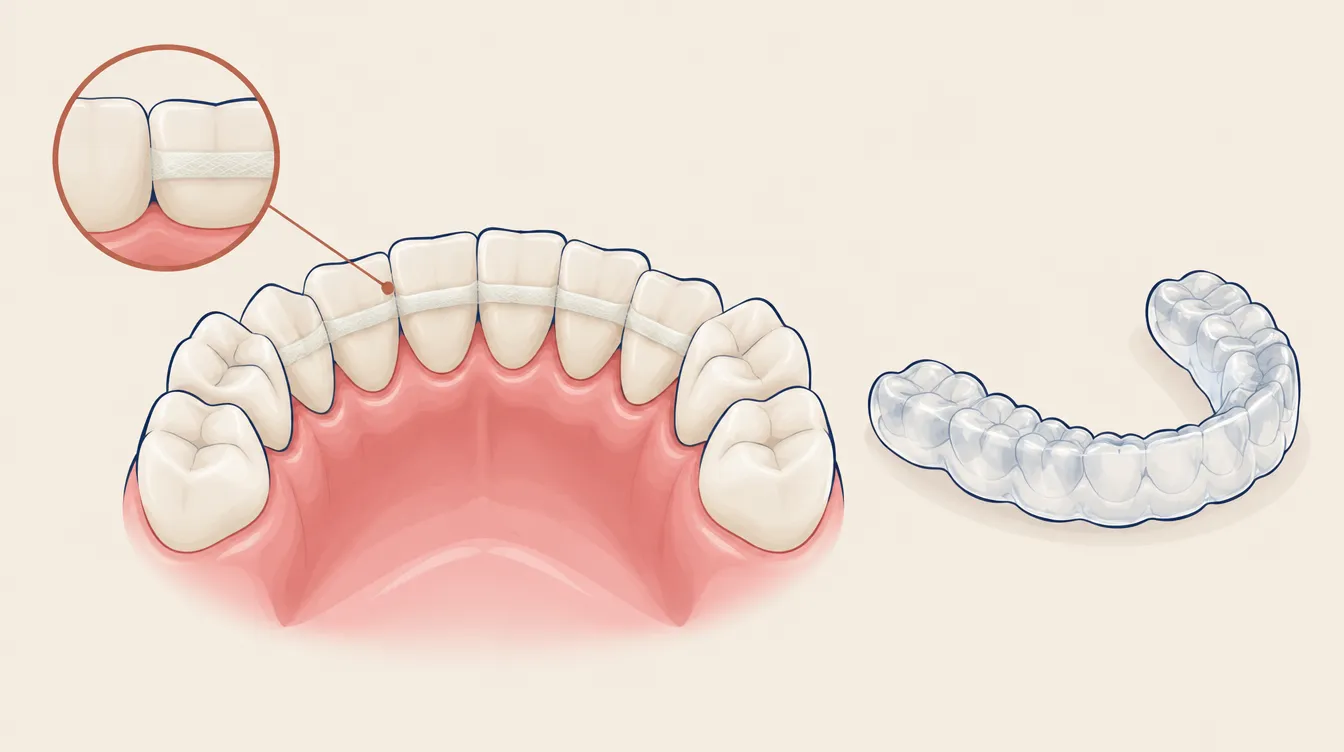
A loose tooth can often be saved: once the cause is found and treated, meaning the gum disease is brought under control and excessive force on the tooth is reduced, the tooth can stay in the mouth for many years; where needed, loose teeth are supported by bonding them to their neighbours (splinting). If most of the bone holding the tooth has been lost, or infections keep coming back, extraction followed by an implant may be the better option. This article explains the causes, the steps of treatment and how the decision is made.
Why do teeth become loose?
Even a healthy tooth has a very small amount of movement; the periodontal fibres that attach the tooth to the bone work like a shock absorber. Noticeable looseness, however, usually has one of these causes:
- Advanced gum disease (periodontitis): the most common cause in adults. Gum inflammation gradually destroys the bone around the tooth; as support decreases, the tooth starts to move. Periodontitis is now classified by stage, which reflects severity and complexity of treatment, and by grade, which reflects the rate and risk of progression (Papapanou 2018).
- Excessive biting forces and clenching: a high filling or crown, clenching or grinding can overload the teeth.
- Trauma: after a blow a tooth may become loose temporarily or permanently.
- Infection at the root tip or a root fracture: an infection inside the tooth or a crack can also cause mobility.
- Rarer causes: cysts, some systemic diseases and hormonal changes in pregnancy.
Because the right treatment depends on the cause, the first step is always diagnosis: periodontal pocket measurements, the degree of mobility, the bone level on X-rays and a bite check.
How is mobility assessed at the examination?
The decision about a loose tooth is not based on a single finding but on reading several measurements together:
- Direction and degree of mobility: the clinician gently moves the tooth between two instruments to assess horizontal and vertical movement. Whether the tooth moves only sideways or also up and down matters.
- Pocket depth and bleeding: the pockets around the tooth are measured with a periodontal probe; bleeding indicates active inflammation.
- Bone level on X-rays: the amount and pattern of bone loss (horizontal or vertical) affects both the prognosis and whether regenerative treatment is possible.
- Bite check: the clinician looks for uneven loading on the tooth and signs of clenching or grinding.
- Tooth vitality: if a root-tip infection is suspected, the vitality of the tooth is tested.
Together, this information shows the chances of saving the tooth and which treatment steps are needed.
Do clenching and excessive forces cause gum disease?
This is a common question, and the literature's answer is clear: excessive biting forces alone do not initiate periodontitis. When gum disease and excessive forces are present together, there is weak evidence that the forces may accelerate the loss of connective tissue attachment (Fan and Caton 2018). According to the same review, occlusal therapy is indicated as part of periodontal treatment to reduce mobility and improve patient comfort and chewing function, and reducing mobility may enhance the effect of periodontal therapy (Fan and Caton 2018).
On clenching and grinding (bruxism), an international consensus report recommends that in otherwise healthy people bruxism be regarded not as a disorder but as a behaviour that can be a risk factor for certain clinical consequences (Lobbezoo 2018). In practical terms, the aim is not to "eliminate" bruxism completely but to protect the teeth, fillings and implants from it.
How is a loose tooth treated?
The clinical guideline of the European Federation of Periodontology describes the treatment of stage I–III periodontitis as a stepwise approach (Sanz 2020):
- Step one: improving oral hygiene, removing plaque and tartar above the gumline, and controlling risk factors such as smoking and diabetes.
- Step two: subgingival instrumentation (deep cleaning of the root surfaces).
- Step three: periodontal surgery where deep pockets persist at re-evaluation; in suitable cases, regenerative methods that aim to rebuild lost bone.
- Step four: regular supportive periodontal care to maintain the result.
These steps are the most important part of saving a loose tooth: once the inflammation is controlled, the tissues around the tooth tighten and the mobility often decreases. For surgical options see the periodontal surgery page.
What is a splint and when is it needed?
A periodontal splint joins loose teeth to their neighbours on their inner surfaces with a thin fibre or wire and composite material. It spreads chewing forces over several teeth, helps the patient chew comfortably and does not require the teeth to be cut down.
The guideline for stage IV periodontitis addresses the additional treatments needed for the consequences of advanced disease, such as teeth drifting, flaring and bite collapse; its recommendations include orthodontic tooth movement, occlusal adjustment, fixed or removable prostheses and supportive care, as well as tooth splinting (Herrera 2022).
A splint may be considered when:
- mobility still disturbs chewing or comfort despite periodontal treatment,
- mobility is increasing,
- it causes aesthetic or speech problems in the front teeth.
A splint is not a treatment on its own: a splint placed without treating the gum disease does not stop ongoing bone loss. How long a splint lasts depends on oral hygiene, biting forces and the material used; over time part of it may break or loosen, in which case it is repaired or renewed. At check-ups, the integrity of the splint and the health of the surrounding gums are assessed together.
What does a night guard do?
If there is clenching or grinding, a custom-made hard or semi-hard night guard protects the teeth during sleep. It aims to reduce tooth wear, fractures of fillings and crowns, and the load on loose teeth. In patients who have had periodontal treatment and who clench, it is a practical way to protect the results. Bruxism also affects implant planning: a night guard may be recommended after implant restorations are completed, to reduce mechanical problems.
Are treated teeth preserved in the long term?
Long-term data are encouraging. In a study of 120 patients followed with regular maintenance for at least 10 years after periodontal treatment, 53 (1.8%) of the 2,927 teeth present at the end of active treatment were lost for periodontal reasons; age over 60 and smoking were associated with periodontal tooth loss (Chambrone 2006). This suggests that in patients who attend maintenance, the great majority of teeth can be kept for a long time; however, it is a single-practice, retrospective study.
When are extraction and an implant the better option?
Not every loose tooth can be saved. Extraction and an implant may be more predictable when:
- most of the bone around the tooth has been lost, down to the root tip,
- abscesses and inflammation keep recurring despite treatment,
- there is a vertical root fracture or an untreatable root problem,
- keeping the tooth in the overall restorative plan brings more risk than benefit.
Gum health is decisive here too: a history of periodontitis is one of the factors shown by strong evidence to increase the risk of peri-implantitis (Schwarz 2018). That is why gum disease is brought under control before implants. If little bone remains after extraction, less surgical options such as short implants may be considered in suitable cases instead of a large graft.
Frequently asked questions
Will a loose tooth tighten by itself?
Usually not, unless the cause is removed. Mild looseness after trauma may decrease over time, but mobility due to gum disease leads to further bone loss if left untreated. An examination is therefore advised when a loose tooth is noticed.
Does splinting harm the teeth?
A splint is bonded to the inner surfaces of the teeth without cutting them. Because cleaning around a splint can be harder, interdental brushes and regular check-ups are important.
Can clenching make teeth loose?
Clenching alone does not start gum disease, but there is weak evidence that it may accelerate bone loss in teeth that already have gum disease (Fan and Caton 2018). For this reason a night guard can be part of treatment in people who clench.
Can a loose tooth be extracted and replaced with an implant straight away?
In selected situations, when there is no active infection and enough bone, an implant can be considered in the same session as the extraction. For teeth loosened by periodontitis, the gum disease is usually treated first; the timing is set after examination and a scan.
Which specialist should I see for loose teeth?
Because the most common cause of loose teeth is gum disease, a specialist in periodontology (periodontist) is the clinician trained for this. See the article what is a periodontist for more.
Whether a loose tooth can be kept is decided after a clinical examination and, where needed, 3D imaging, considering bone support, inflammation, biting forces and the overall treatment plan together. A pre-assessment can start from an existing panoramic X-ray or CBCT. Other short answers on clenching and loose teeth are on the FAQ page.
References
- 1.Papapanou PN et al. Periodontitis: Consensus report of workgroup 2 of the 2017 World Workshop on the Classification of Periodontal and Peri-Implant Diseases and Conditions. J Clin Periodontol 2018;45(Suppl 20):S162–S170doi:10.1111/jcpe.12946
- 2.Sanz M et al. Treatment of stage I–III periodontitis—The EFP S3 level clinical practice guideline. J Clin Periodontol 2020;47(Suppl 22):4–60doi:10.1111/jcpe.13290
- 3.Herrera D et al. Treatment of stage IV periodontitis: The EFP S3 level clinical practice guideline. J Clin Periodontol 2022;49(Suppl 24):4–71doi:10.1111/jcpe.13639
- 4.Fan J, Caton JG. Occlusal trauma and excessive occlusal forces: Narrative review, case definitions, and diagnostic considerations. J Clin Periodontol 2018;45(Suppl 20):S199–S206doi:10.1111/jcpe.12949
- 5.Chambrone LA, Chambrone L. Tooth loss in well-maintained patients with chronic periodontitis during long-term supportive therapy in Brazil. J Clin Periodontol 2006;33(10):759–764doi:10.1111/j.1600-051X.2006.00972.x
- 6.Lobbezoo F et al. International consensus on the assessment of bruxism: Report of a work in progress. J Oral Rehabil 2018;45(11):837–844doi:10.1111/joor.12663
- 7.Schwarz F et al. Peri-implantitis. J Clin Periodontol 2018;45(Suppl 20):S246–S266doi:10.1111/jcpe.12954
This article is for general information and does not replace an examination or a personal treatment plan.
Related articles